
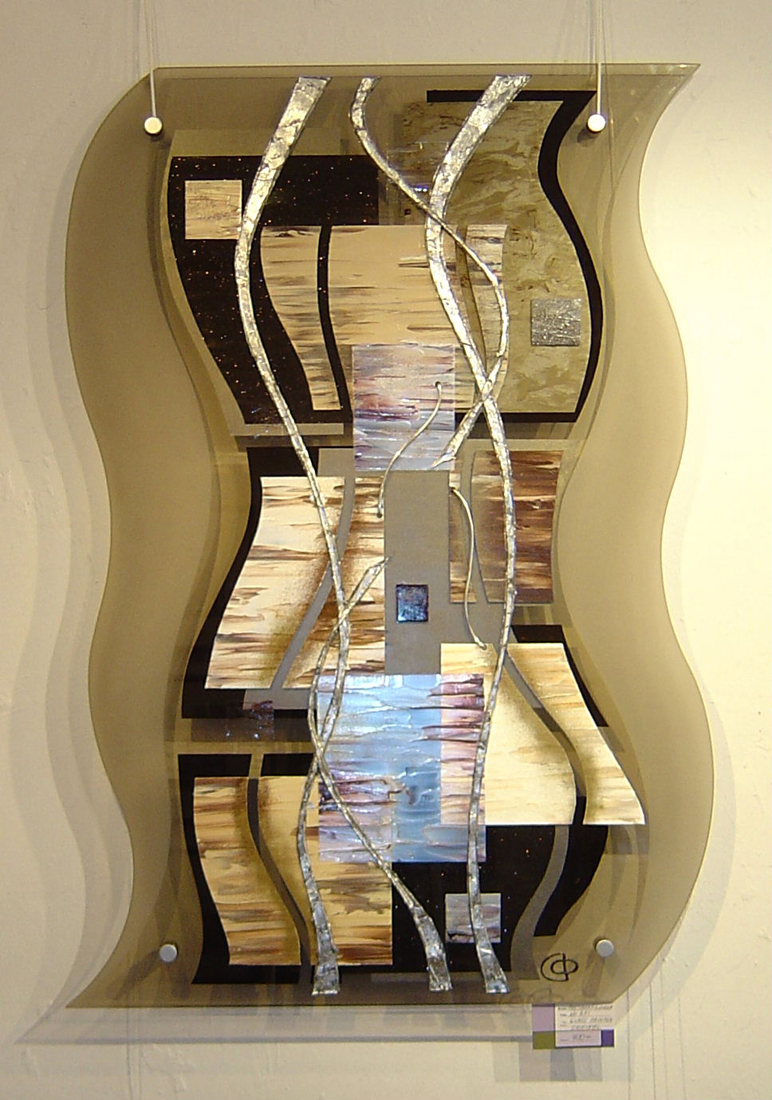
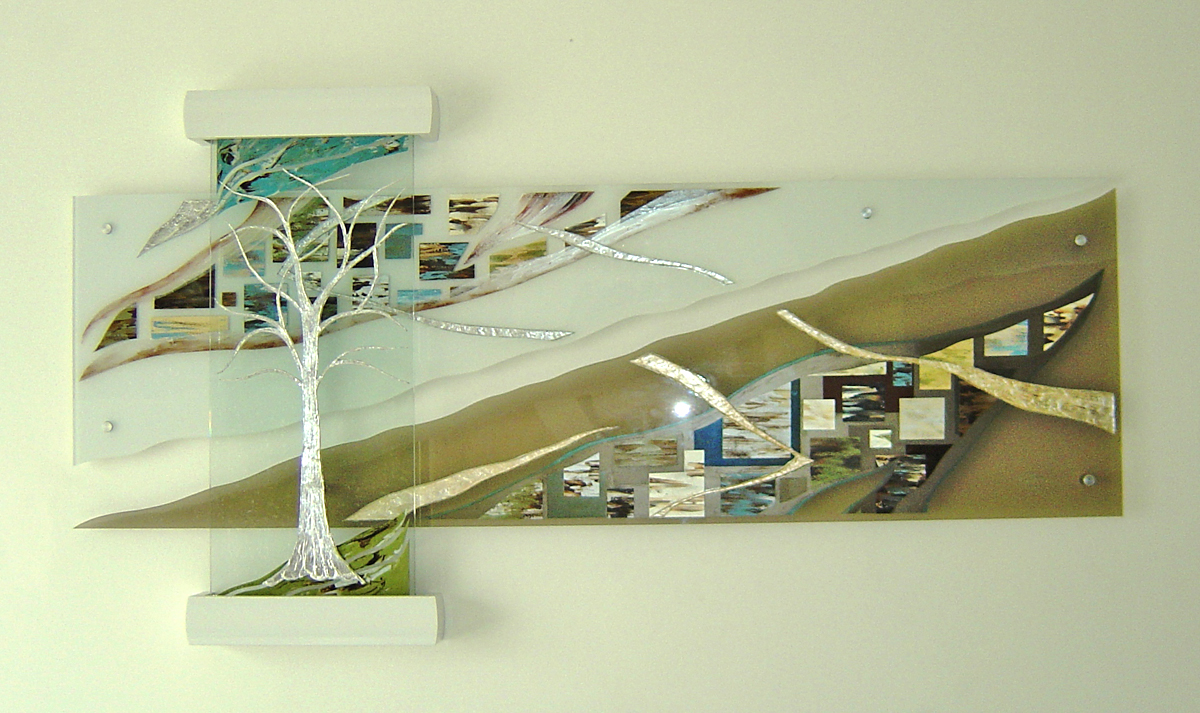
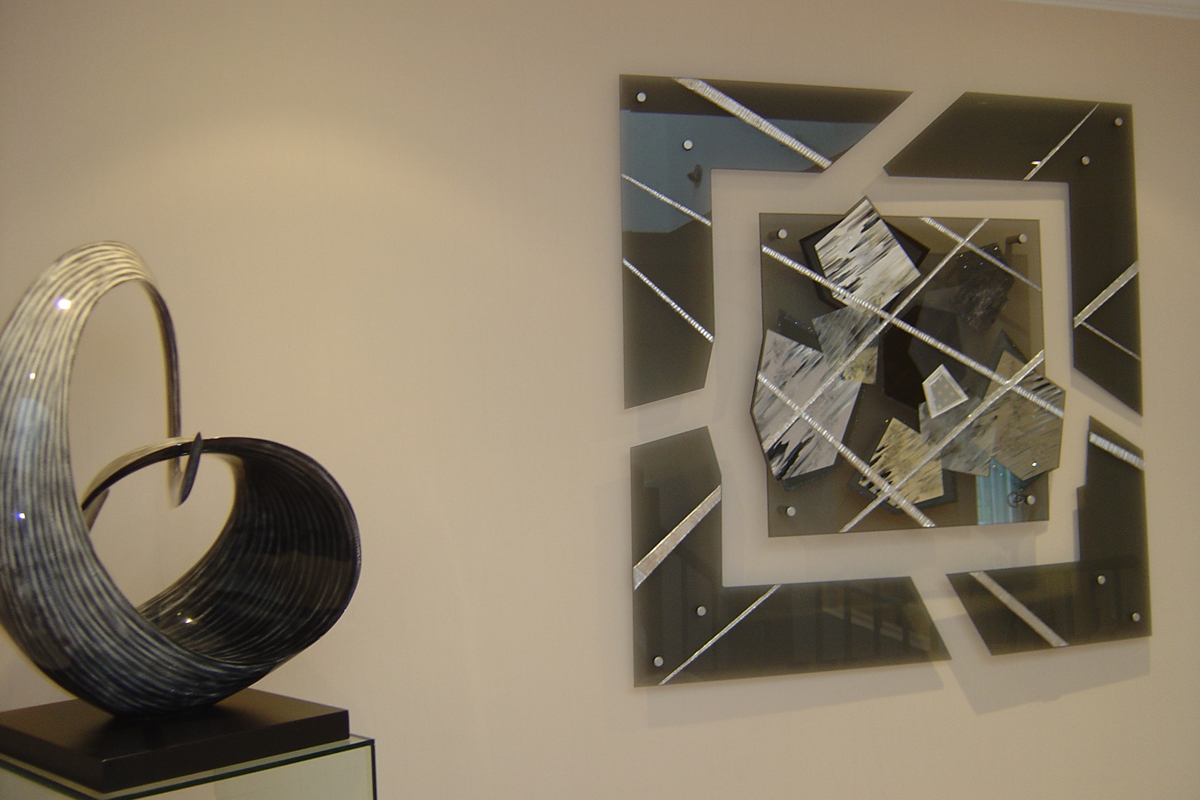
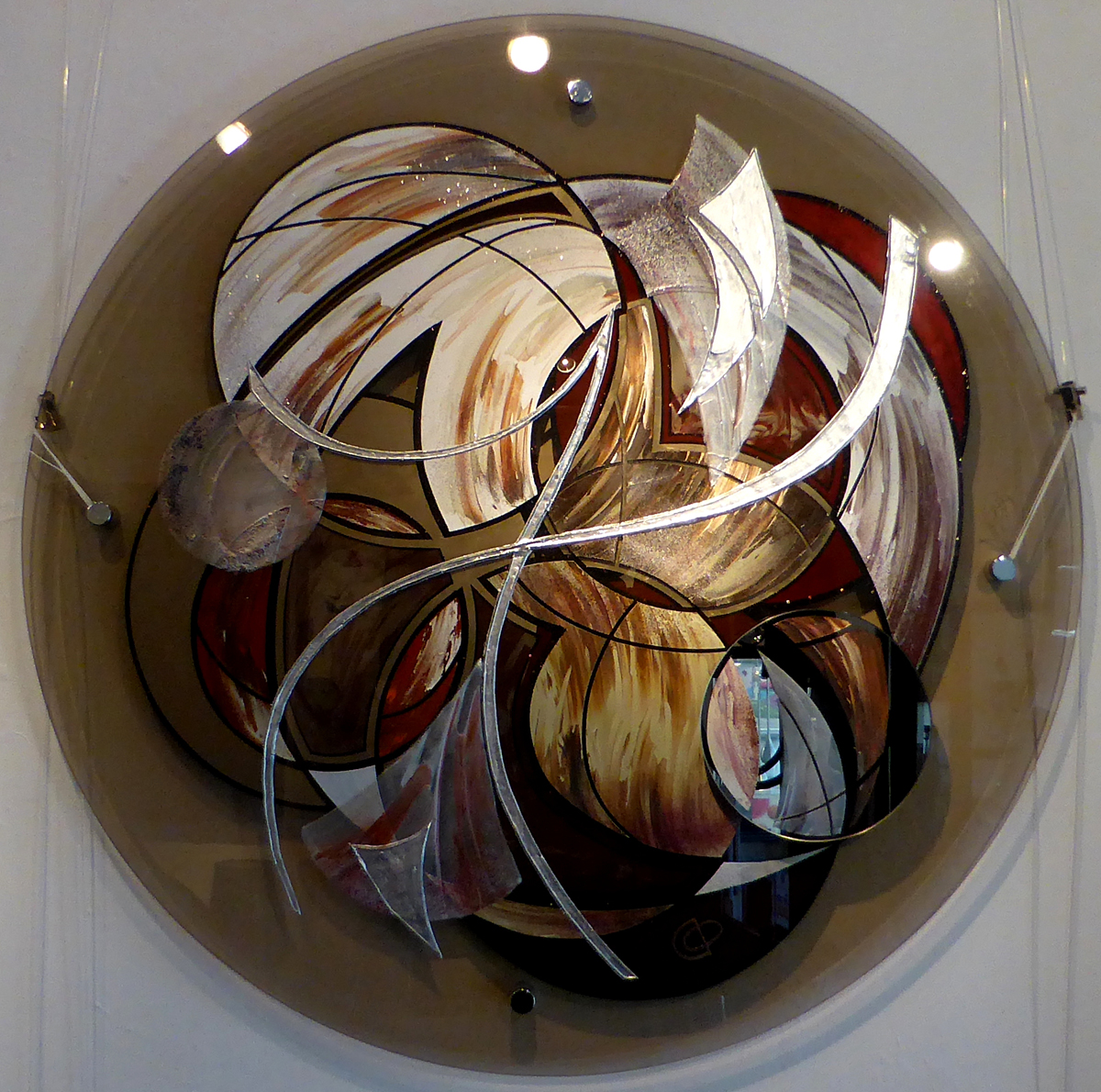
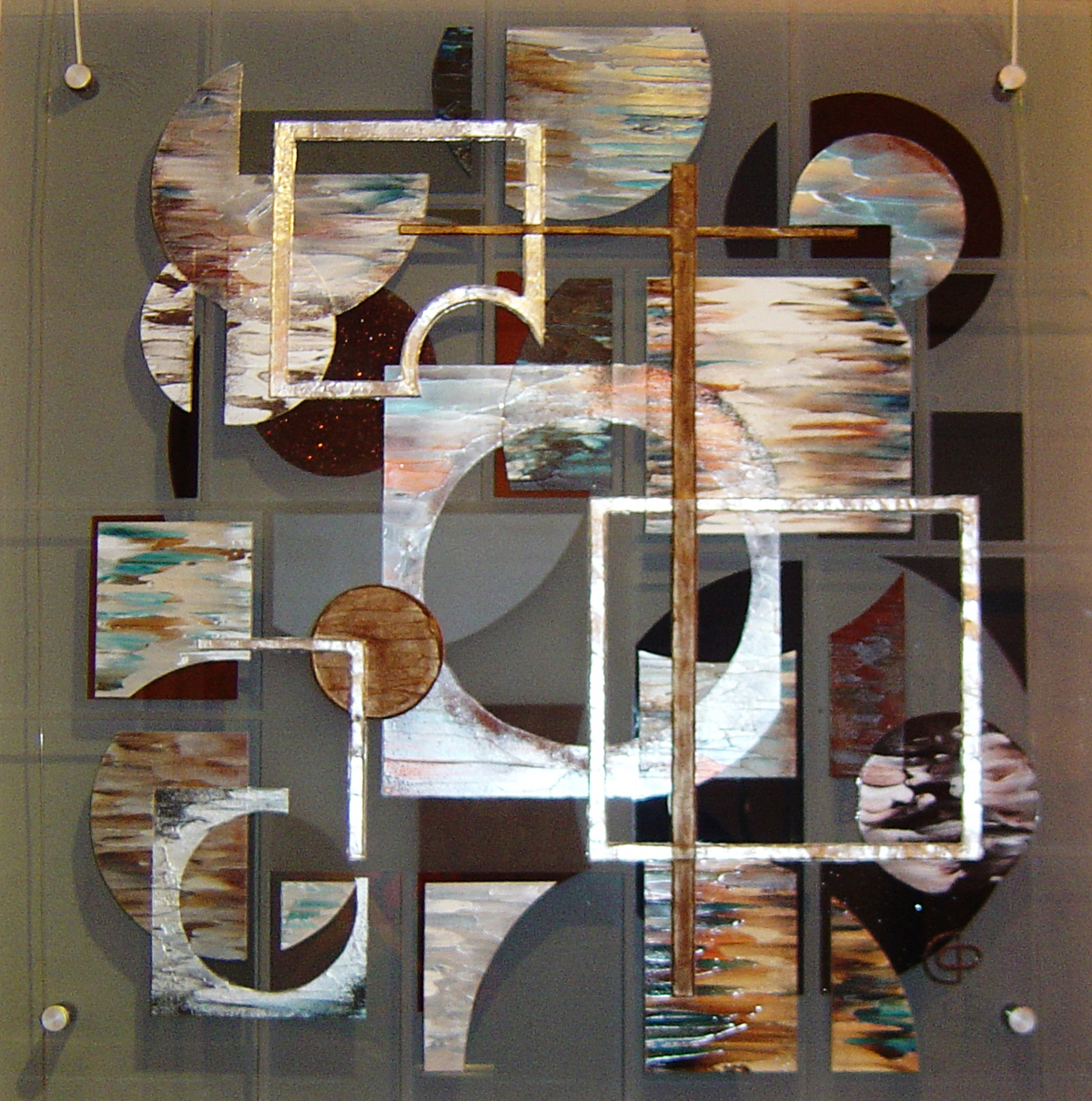
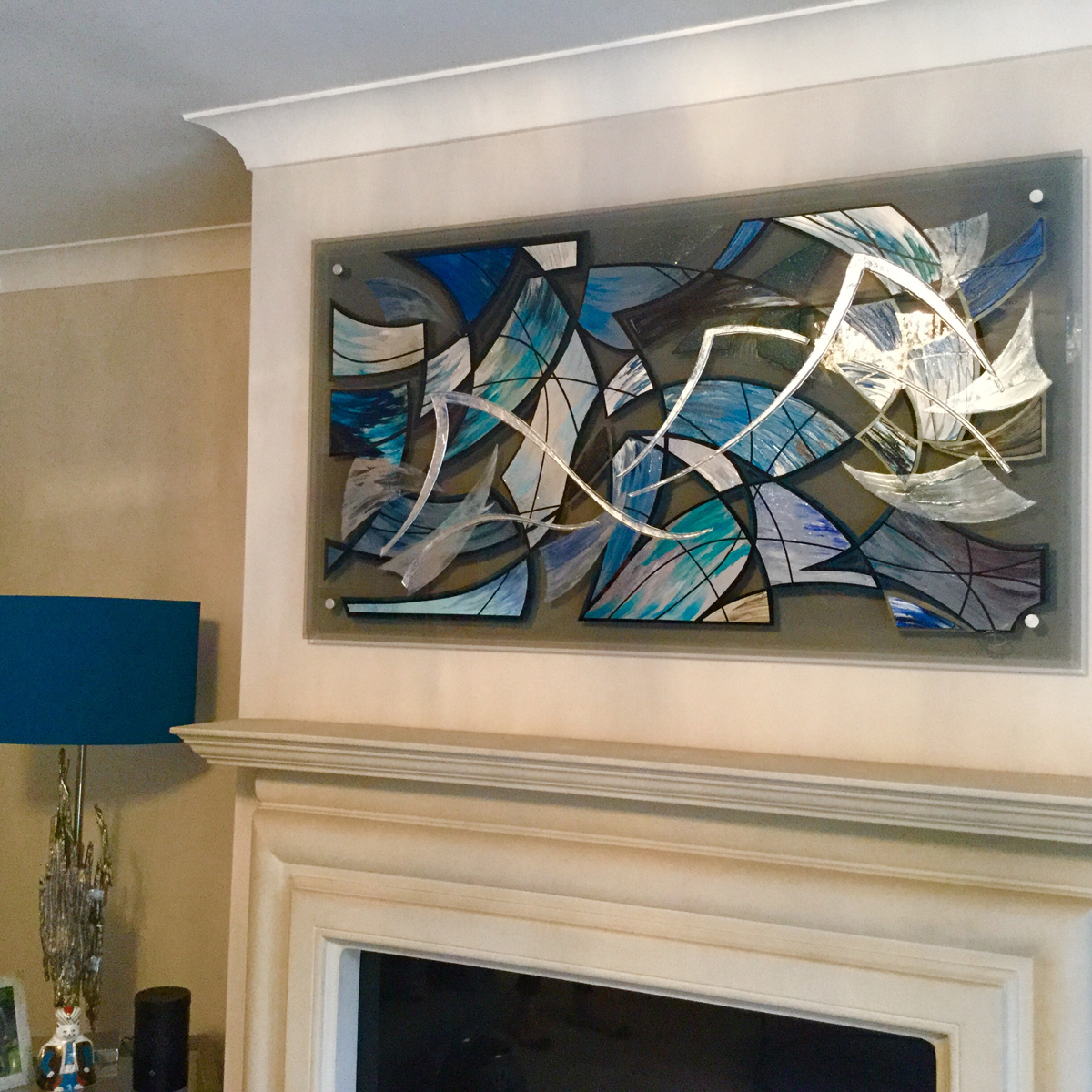
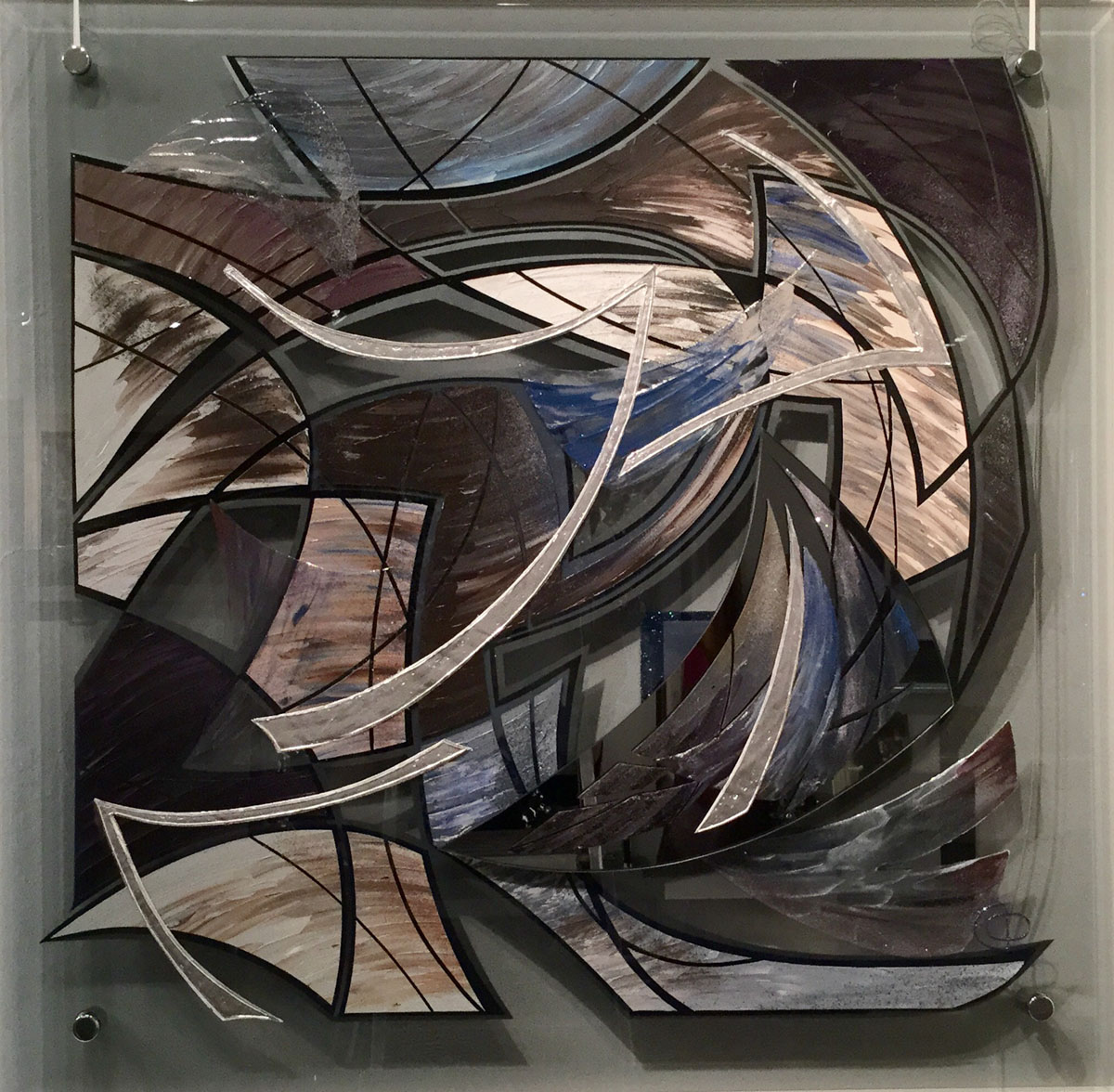
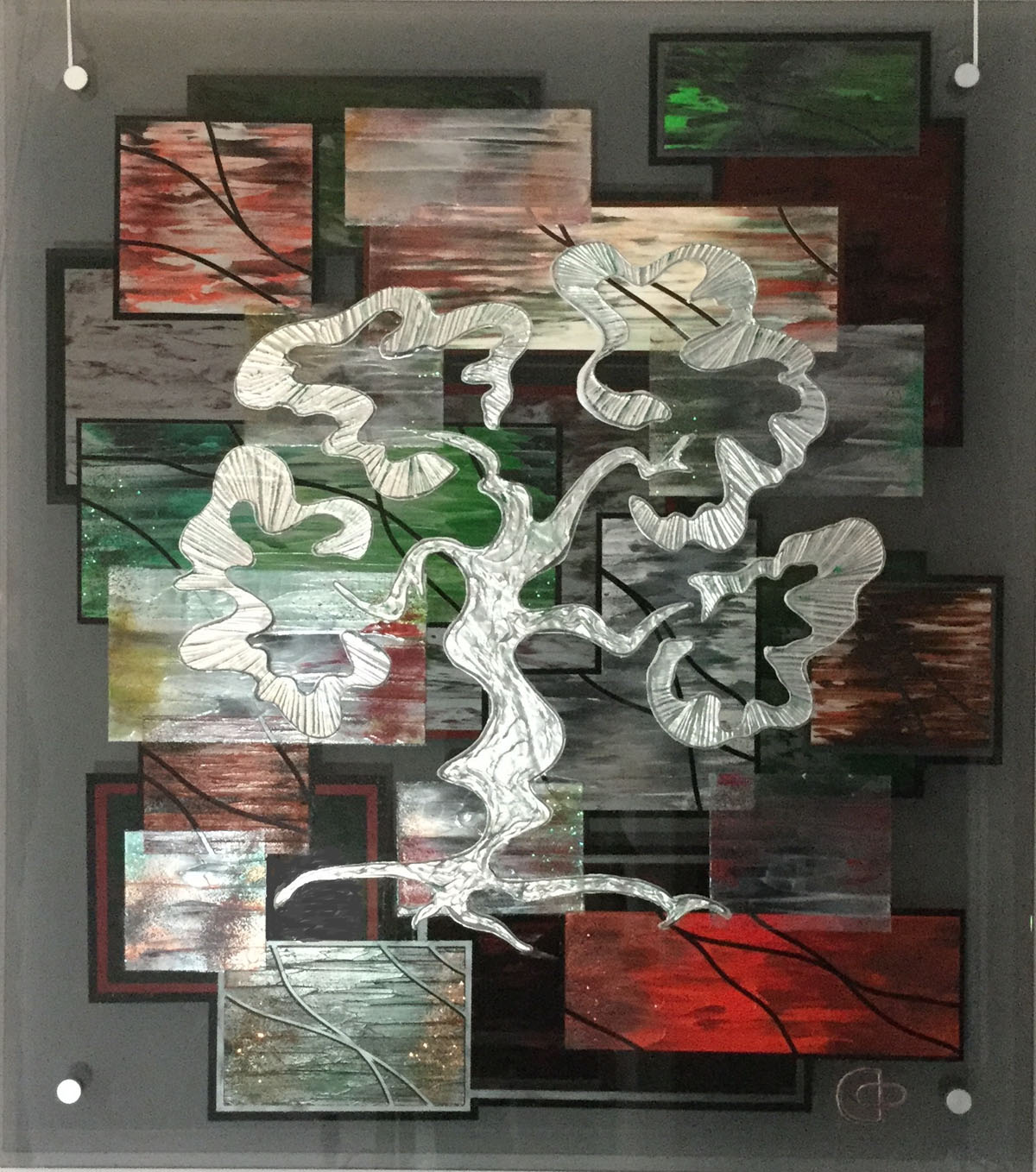
Original paintings on glass panels are produced on a variety of coloured glass from transparent clear, bronze and grey to opaque black and white. All paintings are then fitted with metal stand off fittings which allow at least 1″ gap with the wall thus creating extra depth and shadows. Mainly painted in oils they benefit from the use of glass paints and heavy textured pastes.
Truly stunning results are achieved by painting on both sides of glass, increasing their complexity. Silver leaf, metal and wood are sometimes added. These glass paintings are suitable for bathrooms and kitchens as they don’t absorb moisture and are easy to maintain.
The work

Why glass behaves differently
Paint on canvas is seen by reflected light. Paint on glass is seen partly through it, which is why these pieces change so much between a bright morning and a lamplit evening, and why they suit walls that get some daylight rather than a dark corner.
Painting both sides is what creates the depth: layers on the back read through layers on the front, and the space between them shifts as you move past. Silver leaf, metal and wood are sometimes worked in, and they catch light at angles that flat paint cannot.
Where glass works, and fitting it
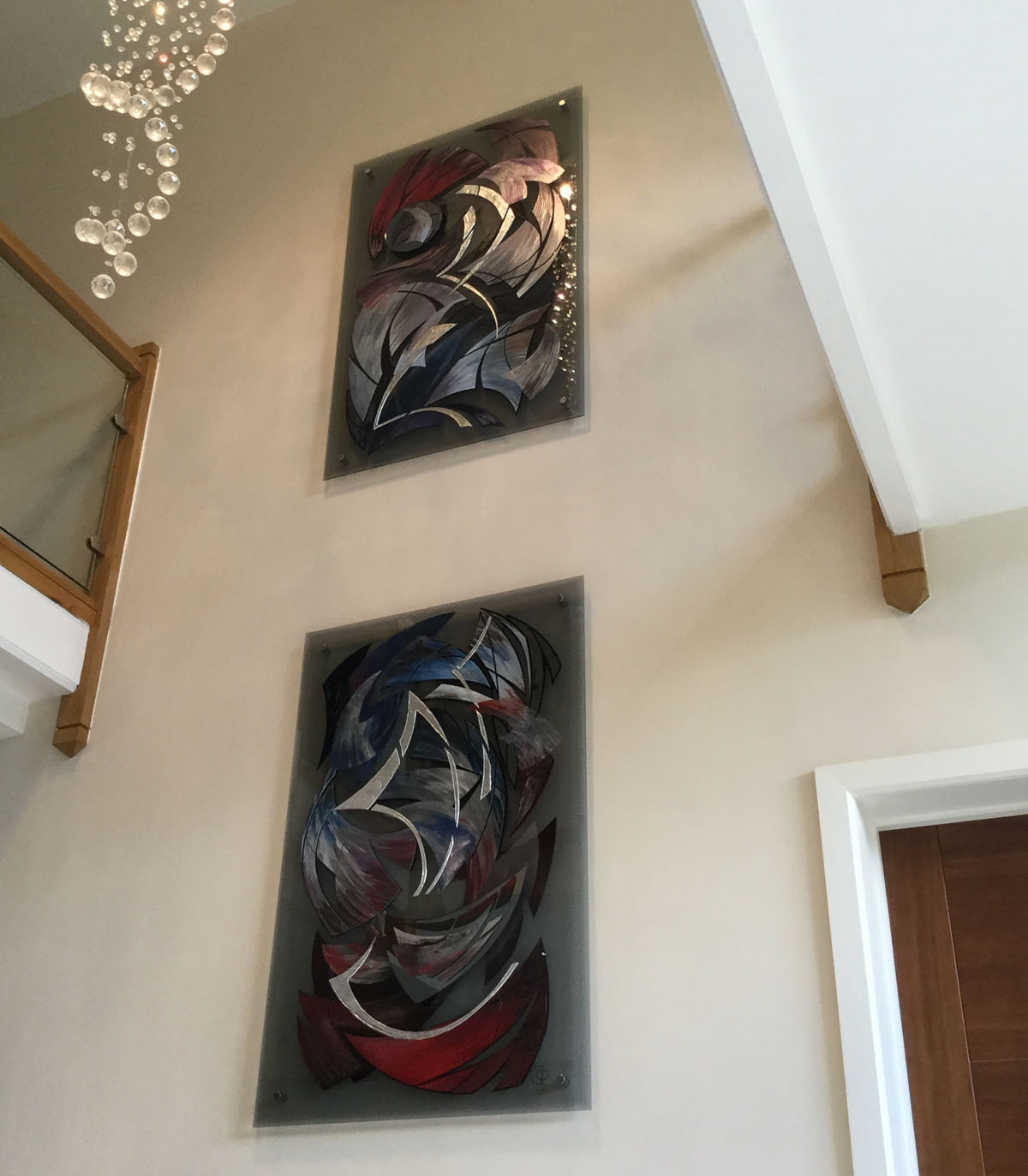
Because the surface does not absorb moisture and wipes clean, glass panels suit bathrooms and kitchens where a canvas would not last. They also work well in hallways, where the changing light through a day does the piece a favour.
Panels are fitted onto a backing so they stand slightly off the wall, which lets light get behind the edges. Fixings depend on the wall and on the weight, and larger pieces are installed rather than hung on a hook.
Commissioning
Pieces are available from the Bowdon showroom and by commission, sized and coloured to the room they will live in. Bring a photograph and a measurement of the wall and we can work from there.
Questions we get asked
Can glass go in a bathroom?
Yes. It is one of the few art surfaces that genuinely suits a humid room.
Is coloured glass or clear better?
It depends on the wall behind it and the light. Clear and bronze read very differently against a dark wall than against a pale one.
Are glass pieces heavy?
Heavier than a canvas of the same size, which is why fixing is planned rather than improvised.