
A dining room is either the least used room in the house or one of the best, and the difference is rarely the table. It is whether the room is comfortable enough to sit in for three hours, and whether it is lit so that people look well in it.
Open-plan dining, at the end of a kitchen or a garden room, is a different brief again: the space has to read as its own room without a wall to make it one.
Size the table to the room, not the room to the table
A dining chair needs around a metre behind it to be pushed back and sat in comfortably, and the person carrying a dish needs to pass behind it. That arithmetic, not the showroom floor, decides the length of the table. Round and oval tops seat more in a tight room than a rectangle of the same area and are easier to pass.
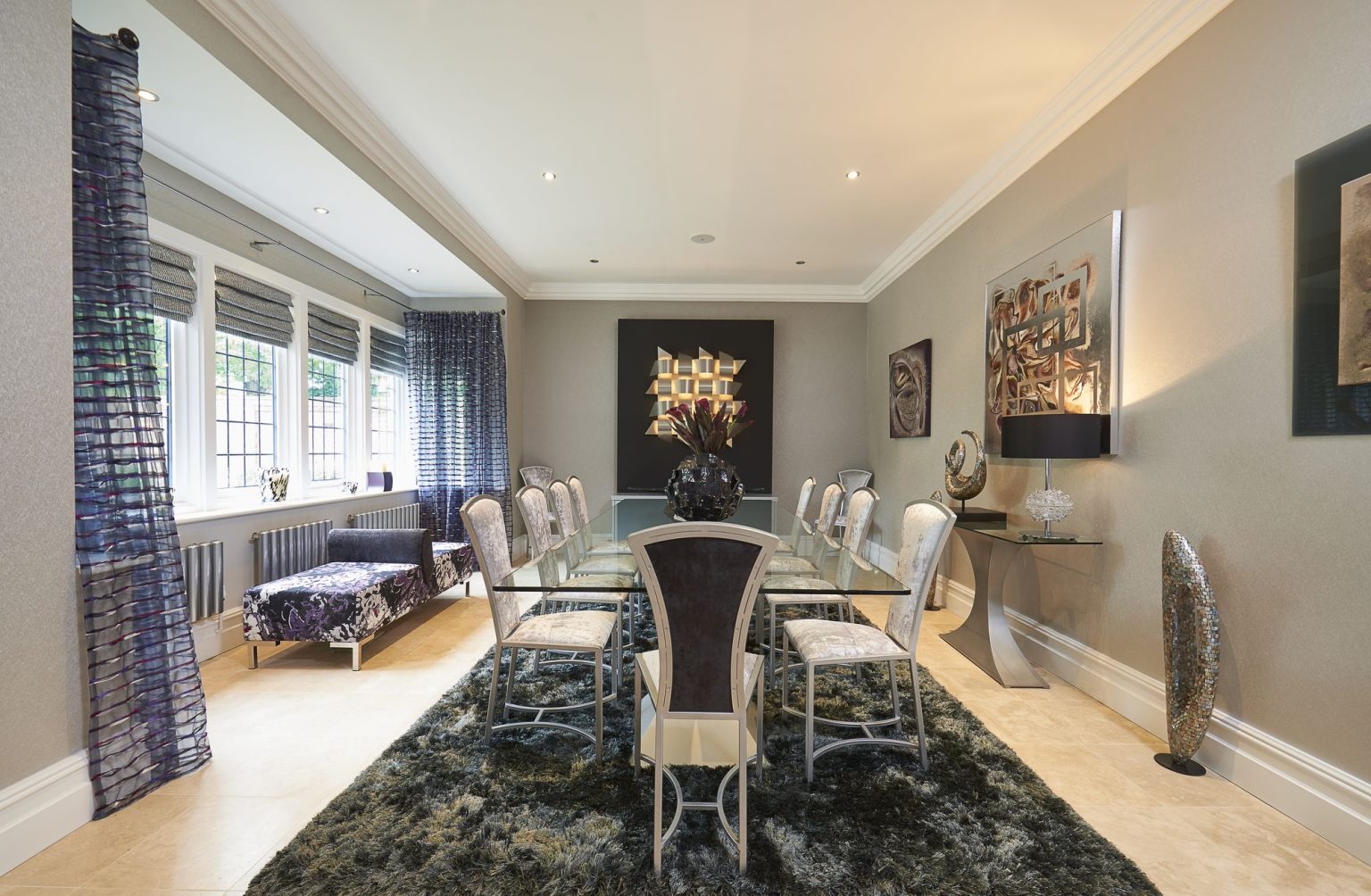
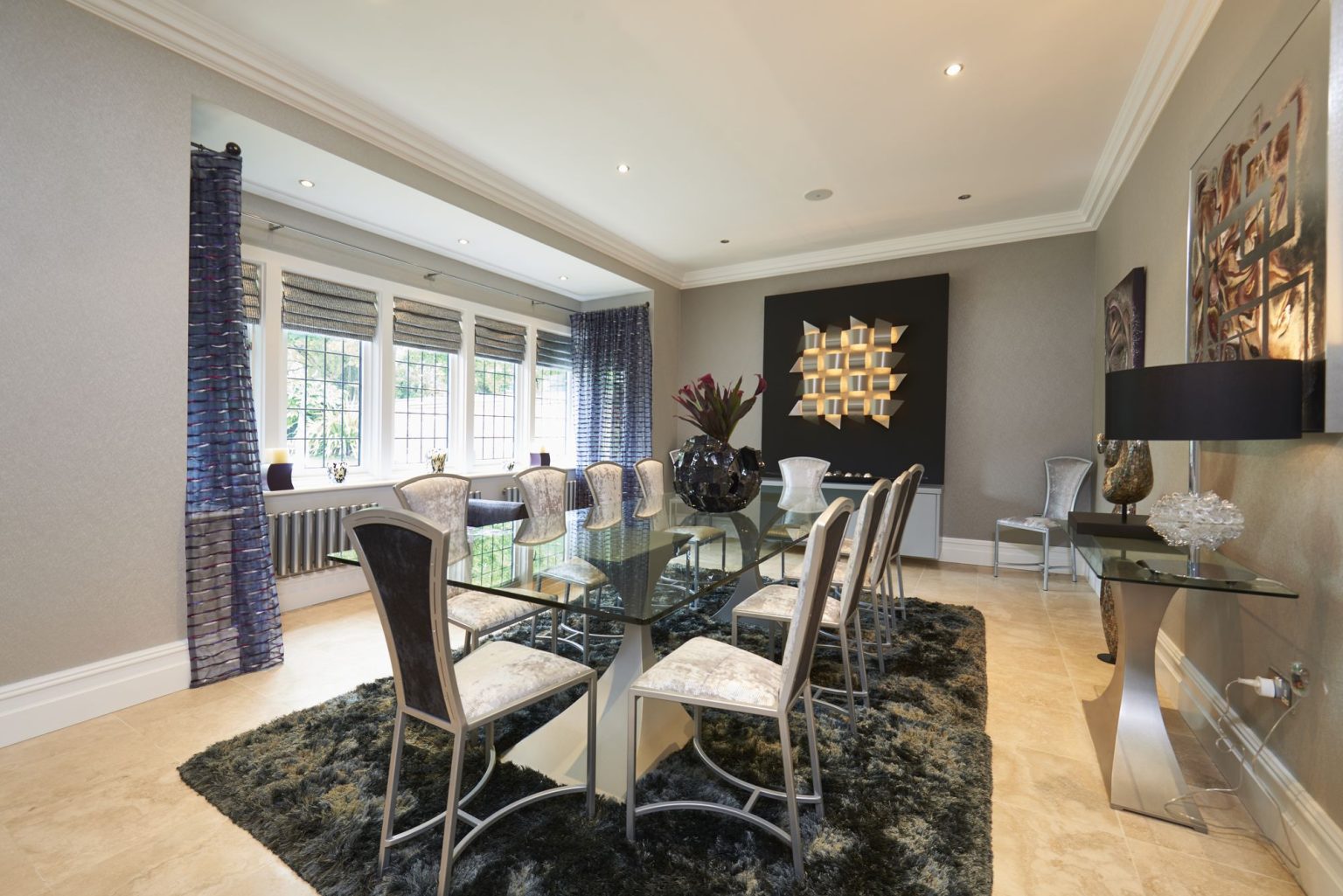
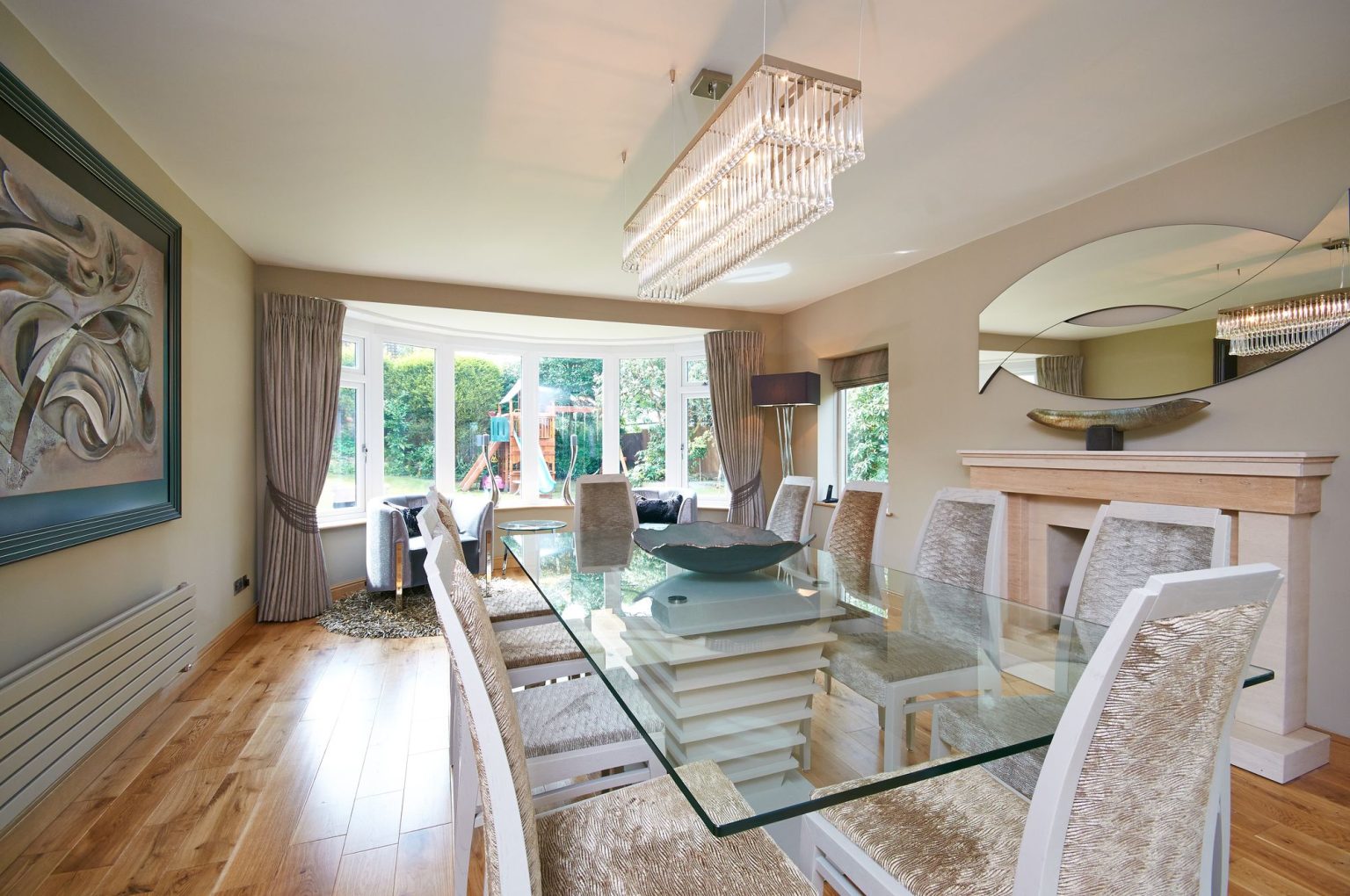
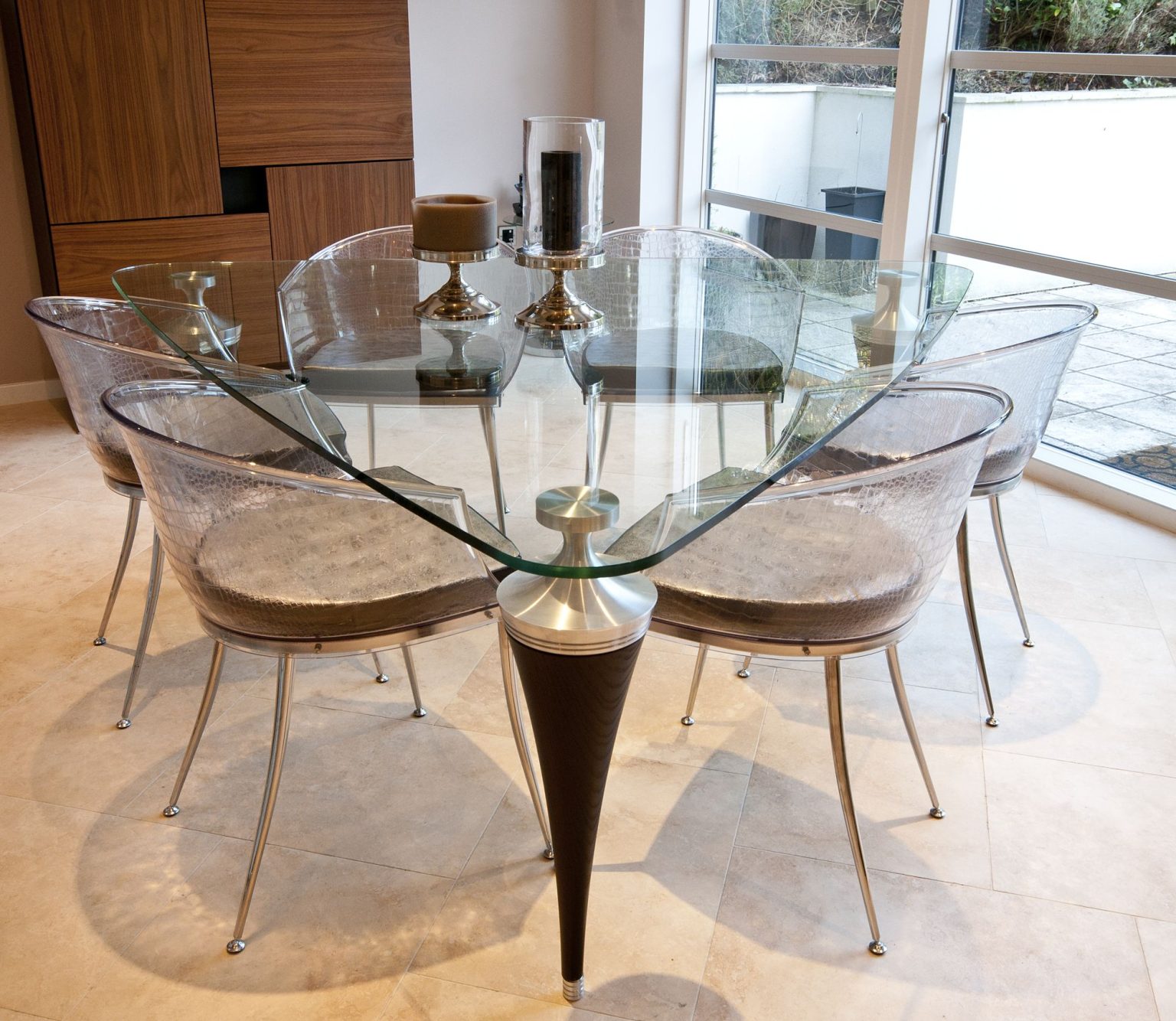
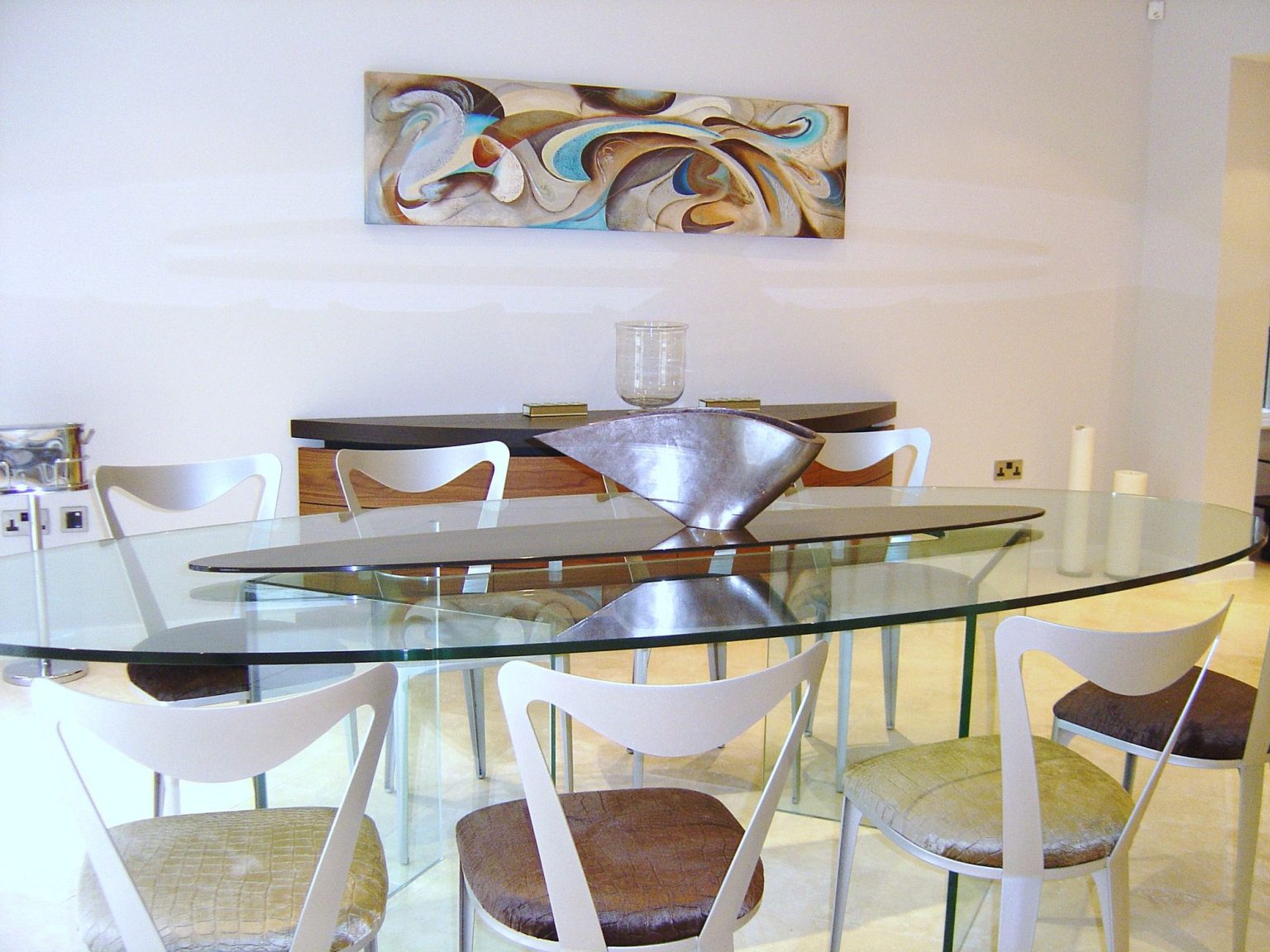
Glass tops keep a large table from dominating a room with limited light. Where the room will mostly seat six but has to take ten twice a year, an extending table is the honest answer and the extension mechanism is worth paying attention to.
Lighting is most of it
One pendant over the centre of the table, hung low enough to light the table and high enough to see across, does more for a dining room than any other single decision. It wants to be on a dimmer and on its own circuit, with the rest of the room lit separately and softly.
Downlights alone are the most common mistake: they light the top of the table and the top of everyone’s head, and nothing else.
Chairs people stay in
Upholstered seats and backs, in something that takes a spill, are what turn a two-hour dinner into a four-hour one. Carvers at the ends change the look of the room more than most people expect. Faux leathers and performance velvets have come a long way, and they are the sensible choice in a room where red wine is a certainty.
Acoustics matter too. A hard floor, a glass table and bare walls make a room nobody can hear each other in: a rug, curtains or a wall covering soften it.
Dining in an open-plan room
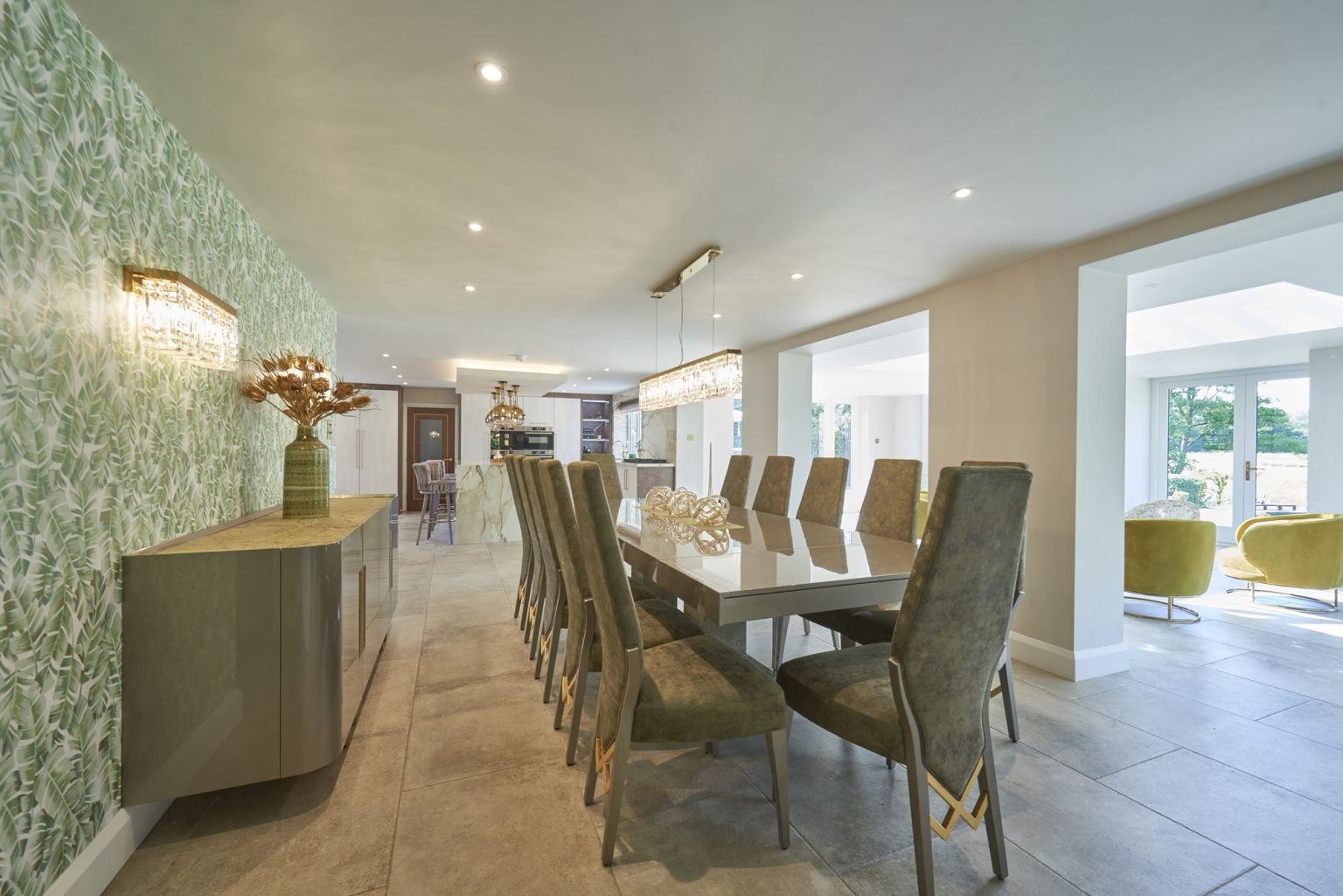
Without walls, the dining area is defined by a rug, a light and a change in the ceiling or the floor. The furniture should relate to the kitchen it sits beside, in finish if not in style, or the two halves argue.
A sideboard matters more here than in a separate dining room: it carries the serving, the storage and the one surface that is not the table.
How our design fee works
A design fee of £300 is charged for one room. This fee includes all aspects of the interior design services provided. If we are unable to supply a specific item or provide a service, we can usually recommend a company we have previously worked with that can meet your specific needs.
We want to ensure that you fully understand our proposals and that the outcome is what you desire. To assist you in making the right decision, we will provide as much product information as possible, including images, drawings, photographs of similar projects, sketches and samples. We can also provide furniture layouts and floor plans, and where required we use AI to produce 3D visualisations of the proposed design.
We aim to provide you with a flexible design and products that suit your needs, ensuring you are happy to place orders with us. A 10% discount will be applied to any orders, up until the total of £300 has been refunded per room. Therefore, if you spend £3,000 or more on the room, the design is effectively free of charge. Please note that any unused balance from a design fee is not transferable between rooms.
A 50% deposit is required when placing the orders, and the balance is due prior to delivery or installation. This is outlined in our terms and conditions.
Questions we get asked
How low should the pendant hang?
Roughly 75 to 90cm above the table top, depending on the fitting and the ceiling. We check it in the room rather than from a rule, because a tall ceiling and a long drop change the answer.
Can you supply the table and chairs?
Yes, including made to order. Dining furniture is one of the areas where made to order costs less than people expect, because you are not paying for a size that does not suit the room.
We only use the dining room at Christmas. Is it worth doing?
Often the better question is whether it should still be a dining room. Several of these have become a study, a snug or a second sitting room, with dining moved to the kitchen.