
How Much Does a Media Wall Cost? What You Pay for in a Built-In Wall
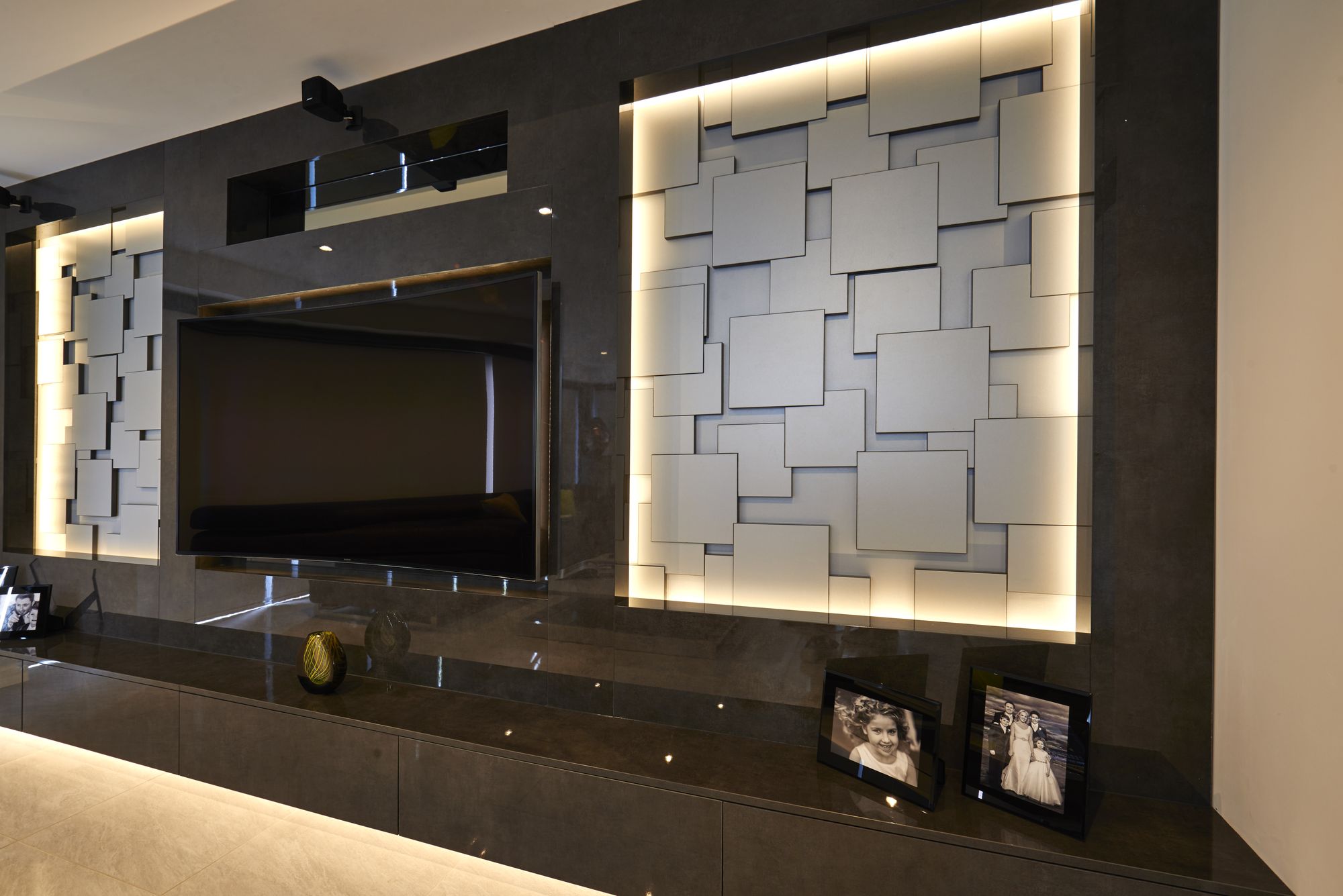
A media wall is quoted as one item and built as several jobs: a frame or a run of joinery, a finish on its face, often a fire, the cables behind it, the lighting in it, and the repairs to the room afterwards. Two walls of the same width can be entirely different pieces of work, and the difference rarely shows in a photograph.
So there is no price here. What a media wall costs depends on the room, and a figure given without seeing it would be a guess. This is what you are paying for, so that a quote can be read properly, and how we price one.
Why media walls are so expensive
Because one wall is several trades, each with its own visit, and the materials can be anything from paint to onyx. A joiner or a dryliner builds the structure. An electrician runs the cables before it is closed up and comes back later to connect. A fire may need its own installer, a plastered wall needs a plasterer and then a decorator, and the audio visual installer comes near the end.
The visits have to happen in the right order, and the wall is not finished until the slowest of them is.
Size, and how the wall is built
Size is the obvious driver: a wall that runs floor to ceiling and corner to corner has more material and more junctions to finish cleanly. The bigger driver is how it is built.
A stud wall is a timber or metal frame fixed in front of the existing wall, boarded, plastered and painted, with recesses formed for the screen and the fire. The materials are inexpensive. The cost is in the labour, the drying time and the accuracy of the recesses, because a plastered edge that wanders by a few millimetres shows the moment the screen is lit.
Joinery is made in a workshop: cabinets, panels, shelving and a frame for the screen, in veneer, lacquer or paint. The materials and the workshop time cost more; in return you get a factory finish and doors that hide the equipment. The two partner workshops that make our fitted furniture survey and template on site before anything is cut, so the joinery sits tight to walls that are never as straight as the drawing.
Plenty of walls are a mix, with plaster around the screen and joinery cabinets below it. That puts the money into the part you open and touch every day.
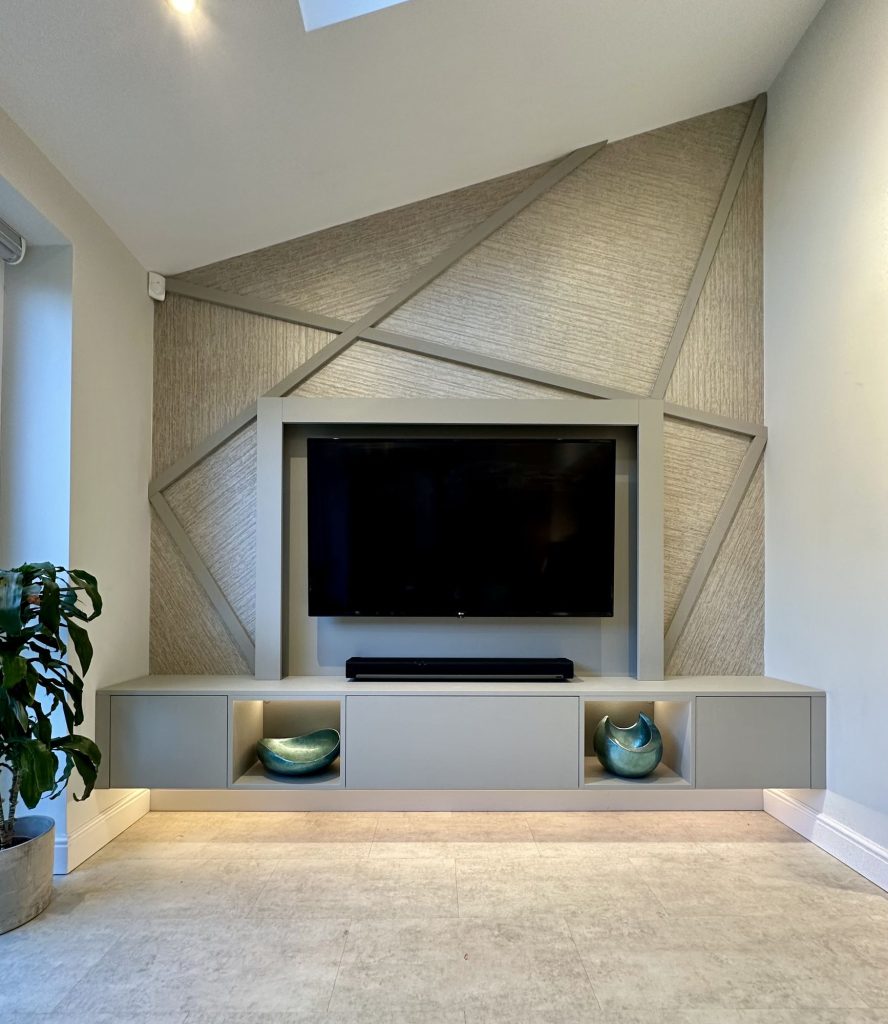
Finishes: where the money moves
Paint on plaster is the baseline. Everything after it adds material, specialist time or both.
- Veneer. Real timber on a stable board. The cost rises with the species and with the matching: grain that runs on from one panel to the next takes more veneer and more workshop time.
- Stone and marble. Heavy, so the structure behind has to carry it, and cut to a template of the wall. Choose the slab in person: two slabs of the same stone can look very different.
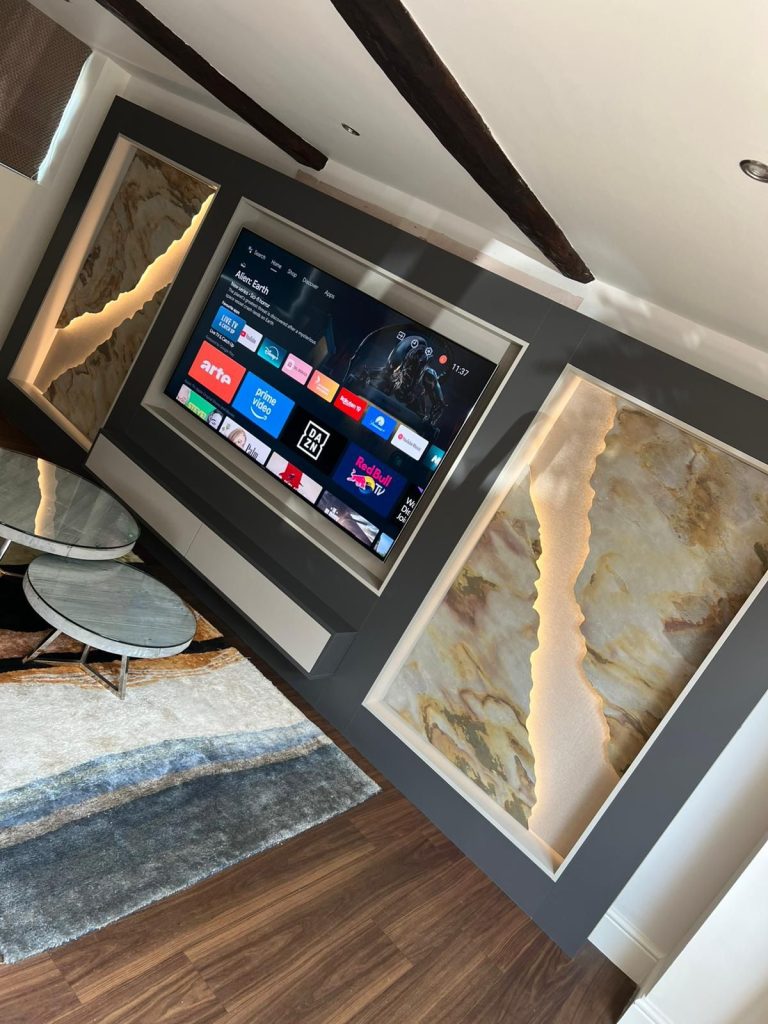
- Onyx. Translucent and usually backlit, so the cost is the stone plus an even light behind it, a diffuser so the LEDs do not show as dots, and access to the drivers for the day one fails.
- Gold leaf. Laid by hand and sealed. The cost follows the area covered and whether the leaf is gold or an imitation metal.
- Backlighting and lit shelving. LED tape, profiles, drivers and dimmers on their own circuits, planned before the wall is built.
On a new build in Bowdon the decorative panels of the media wall are backlit tiles, and they became the feature of the room. One good finish used where it is seen does more than a cheaper one spread across the whole wall.
The fire and its insert
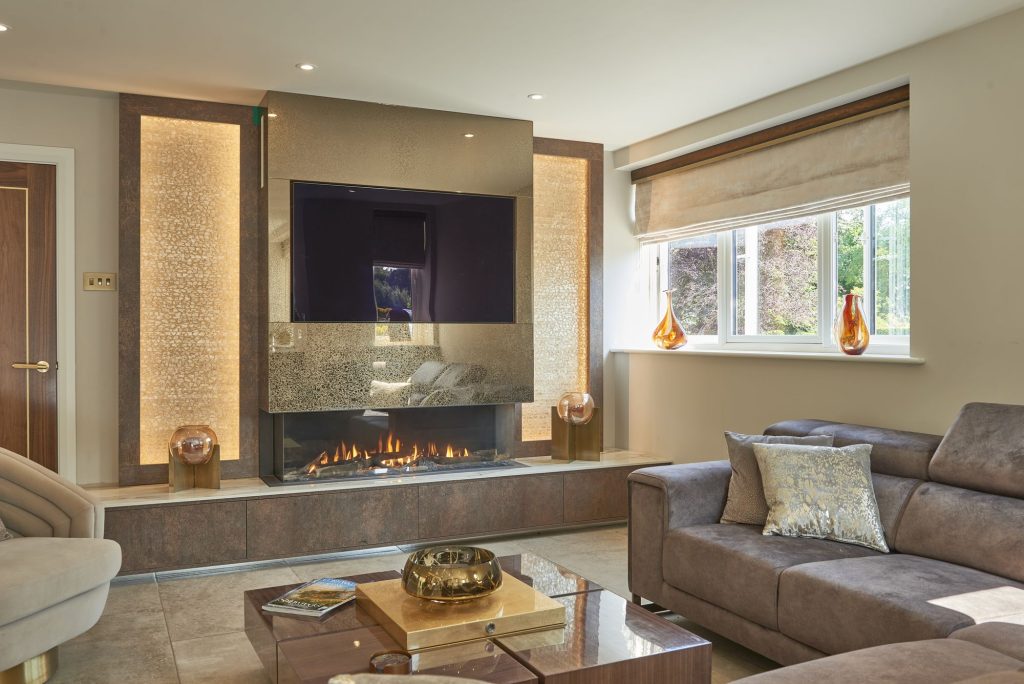
The fire is two costs: the appliance, and the wall built around it. That wall has to follow the manufacturer’s installation instructions on recess size, the materials close to the fire and the clearance above it, so the fire is chosen before the wall is drawn, not after.
An electric fire needs power and, depending on the model, room for its heater to move air. A gas fire needs a flue and a Gas Safe registered engineer, and usually larger clearances and a non-combustible lining, as its instructions specify. A wide fire costs more twice over: once for the insert and again for the length of wall built to suit it. The clearance above it also decides how high the television goes.
Cabling, ventilation, the electrician and the AV
This is the part nobody photographs, and it decides whether the wall works. Sockets and a data point behind the screen. A conduit from the screen to wherever the equipment lives, wide enough to pull another cable through later without opening the wall. A ventilated compartment, because a console or an amplifier shut in a sealed cupboard will overheat. Speaker cables and lighting circuits, all run before the board goes on.
The electrician’s time is a real part of the cost, and so is the audio visual installer’s. We design the joinery around the equipment and work with your installer on where it goes.
Making good
This is the line most often missing from a quote. Every junction with the floor, the ceiling and the walls either side needs finishing: skirting cut back or replaced, coving returned, flooring repaired, a ceiling patched where a cable came through. Then the rest of the room usually needs decorating, because new work beside old paint makes the old paint look tired.
A built-in wall or a flat-pack unit
Pre-made media walls exist, and in some rooms they are a reasonable answer. They come in standard sizes, take a standard fire and screen, and are assembled on site. What they cannot do is fit the room. The gaps to the ceiling and the side walls are filled with strips, the cables run where the unit allows, and the whole thing sits in front of the wall rather than becoming part of it.
A bespoke media wall is drawn from the room: the width between the alcoves, the real ceiling height, the windows and doors, the fire you have chosen, the screen you own and the larger one you will probably buy next. That last point is what dates a custom wall fastest. A recess built tightly around one television will be filled or cut when it is replaced.
How long a media wall takes to build
The fitting is the short part. What sets the timescale is everything that has to be decided and made first:
- the design agreed, including the exact fire and the screen sizes it allows for;
- lead times on the fire and on any stone, onyx or veneer;
- the workshop’s survey and template, and then its making time;
- the electrician’s first fix, before the wall is closed;
- drying time, if the wall is plastered;
- the audio visual installation and the making good, which come last.
A painted stud wall around an electric fire and a veneered wall with a stone surround and a gas fire are very different programmes. In a larger build the wall also has to fit the builder’s programme, which is the best reason to design it at the drawing stage.
How we price a media wall
The wall is designed in the studio as part of the room, its finishes chosen alongside the fabrics, flooring and lighting. It is then surveyed and templated on site by the workshop that will make it, and priced on that room: its measurements, the materials and everything that goes into the wall. If there is a budget, the design starts from it, and the money goes where it will show.
A design fee of £300 covers one room and includes every part of the design service. It is refunded as you order: 10% comes off any order until the whole £300 has come back, so a room you spend £3,000 on is designed free of charge.
The fee covers the whole room, not just the wall.
If you have a wall in mind, bring its measurements and a few photographs to the showroom in Bowdon. It is open Monday to Saturday, 9am to 5pm, with no appointment needed.