
TV Above the Fireplace: Getting a Media Wall with a Fire Right
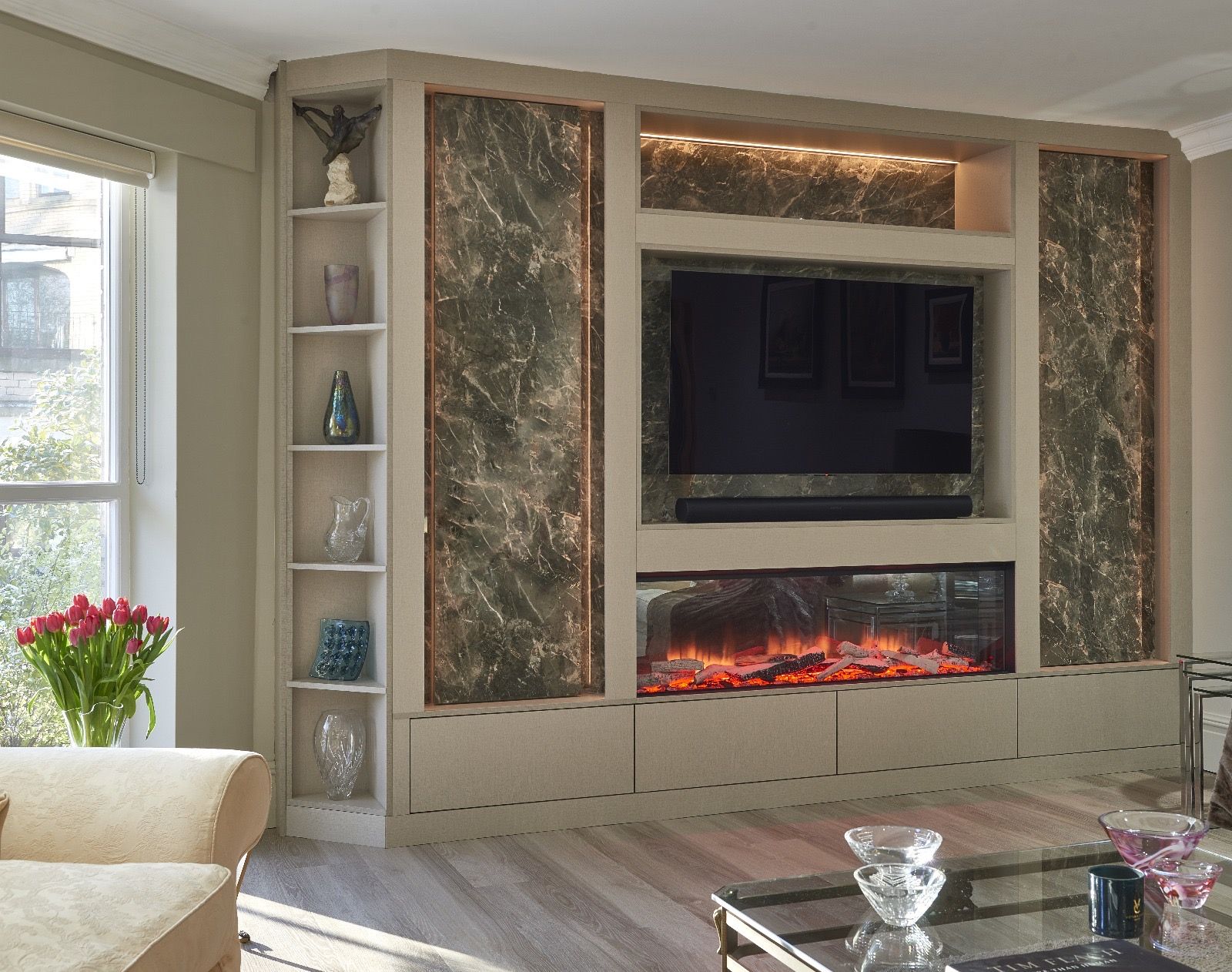
Putting a TV above the fireplace is the most common plan for a living room media wall, and the most common way to get one wrong. The fire goes in at a comfortable height, its manufacturer asks for a clear distance above it, the screen goes on top of that, and everyone on the sofa spends the evening looking up.
A fire and a screen can share a wall perfectly well. They have to be drawn together, and in our media wall design the screen height is fixed first and the fire is fitted below it, not the other way round.
Heat rises, and the screen is in the way
A fire sends warm air straight up the face of the wall, and the television is the first thing it meets. Electronics that run hot wear out sooner. Two documents decide how close the two can be: the fire manufacturer’s installation instructions, which give the clearance above the fire and to anything combustible, and the television maker’s guidance on ventilation and operating temperature. Read both before the wall is drawn, and where they differ, work to the larger distance.
The type of fire changes the problem more than anything else.
- Electric. Most models will run the flame effect with the heater off, which gives off very little warmth. With the heater on, where the vent sits matters: one that blows up the face of the wall sends warm air straight at the screen. Some electric fires are sold for use below a television and state the clearance. If the instructions say nothing, ask the manufacturer.
- Gas. Real heat, a flue, and a Gas Safe registered engineer to install it. The clearance above is usually greater than for an electric fire, and the surround often has to be non-combustible.
- A real fire or a wood burner. The most heat and the least control over it, with hearth and flue rules that an installer registered with HETAS will know. We would rarely put a television directly above one. Where a room has a working chimney breast, the screen usually belongs on another wall.
A projecting shelf, or a step forward in the wall between the fire and the screen, throws some of the rising air out into the room. It helps, but it does not replace the clearance.
TV height on the wall
The centre of the screen wants to be at roughly seated eye level. On most sofas that is somewhere around a metre from the floor, but seat heights vary, so sit on the sofa you own, look straight ahead, and have someone measure from the floor to your eyes. That measurement is the starting point for the whole wall.
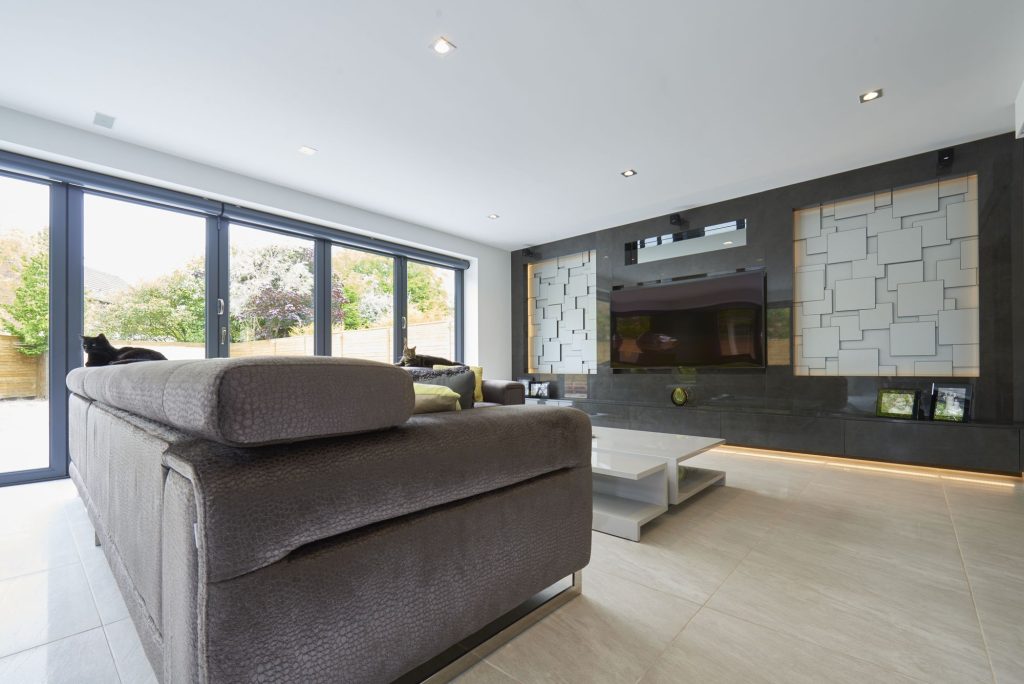
Looking slightly down at a screen is comfortable for hours. Looking up is not: the head tips back, and a long film is enough to feel it in the neck the next morning. Sitting further back lessens the angle, but by less than people hope.
Now stack up a typical media wall with a fireplace. The fire sits some way off the floor, it has its own height, the clearance goes on top, and only then does the screen begin. Add half the height of the screen and the centre of the picture is well above eye level before anyone has made a mistake. Most of the good media wall ideas with a fire are ways of taking height out of that stack:
- set the fire low, close to the floor, rather than at a raised hearth height;
- choose a fire that is wide and low rather than tall;
- choose a fire whose instructions allow a smaller clearance with a screen above it;
- move the fire to one side of the screen rather than directly below it;
- leave the fire out.
A tilting bracket cuts reflections, but your head is still tipped back. Pull-down brackets, which bring the screen down and forward for watching, exist for fireplaces that cannot move. On a new wall it is far better to get the height right on paper.
Recessed screen or set forward
A screen set into a recess sits flush with the wall, hides its cables, and reads as joinery rather than an appliance hung on it. It needs more care than it looks: a television gives off its own heat through the back and top, so a recess needs a gap around the screen and a way for warm air to escape, and above a fire it can trap the fire’s heat as well. The bracket has to suit the depth of the recess and still let someone reach the connections. And the recess fixes the size of the screen: build it tightly around this television and the next one will not fit, so design it for the sizes you are likely to own.
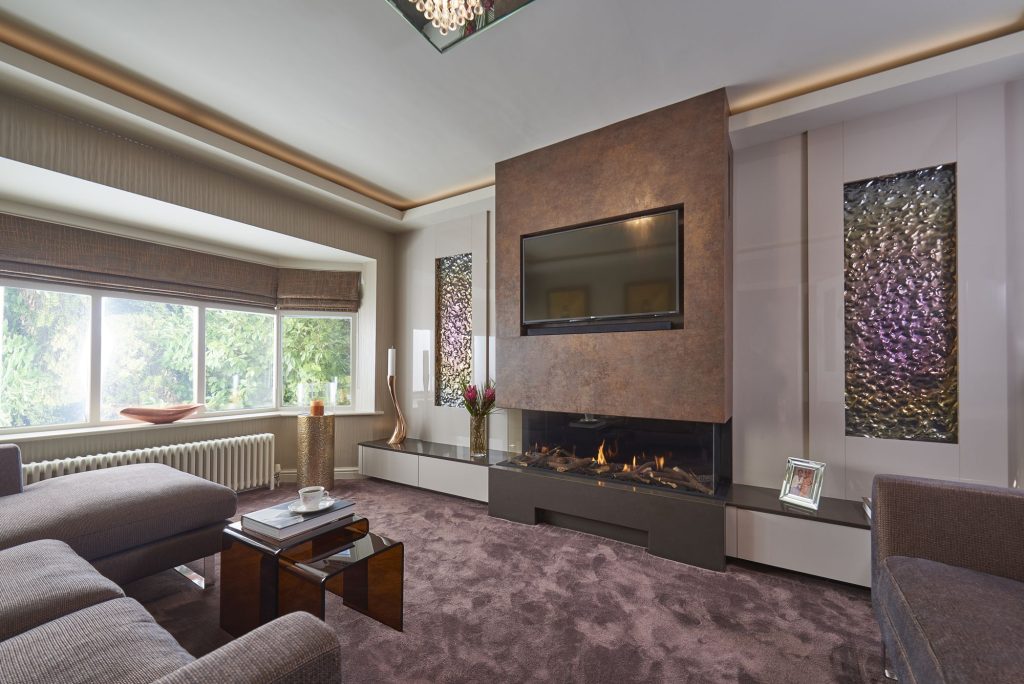
A screen set forward on the face of the wall avoids all of that. It can be changed for any size, an arm can pull it out or angle it, and air moves freely round it. What it gives up is the built-in look, so the wall behind does more of the work: a panel, a change of material or a soft light behind the screen makes it look intended rather than hung.
Where the equipment lives
Not above or beside the fire, which is the warmest place on the wall. Boxes, consoles and amplifiers are better in a low cabinet to one side, or in a cupboard in another room, with a conduit to the screen wide enough to pull a new cable through later.
That cabinet needs ventilation, because a console shut in a sealed cupboard will overheat. It also needs a plan for the remote. Many remotes work by infrared and have to see the box, so behind solid doors they stop working unless the doors are perforated or fabric-faced, a repeater is fitted, or the equipment is controlled another way. A soundbar under the screen sits right in the rising air, so check its maker’s guidance too.
Lighting the wall
A bright screen against a dark wall is tiring to watch, which is why a soft light behind the screen makes evening viewing easier on the eyes. Lit niches or shelving either side do a similar job and give the wall something to look at when the television is off, which is most of the day.
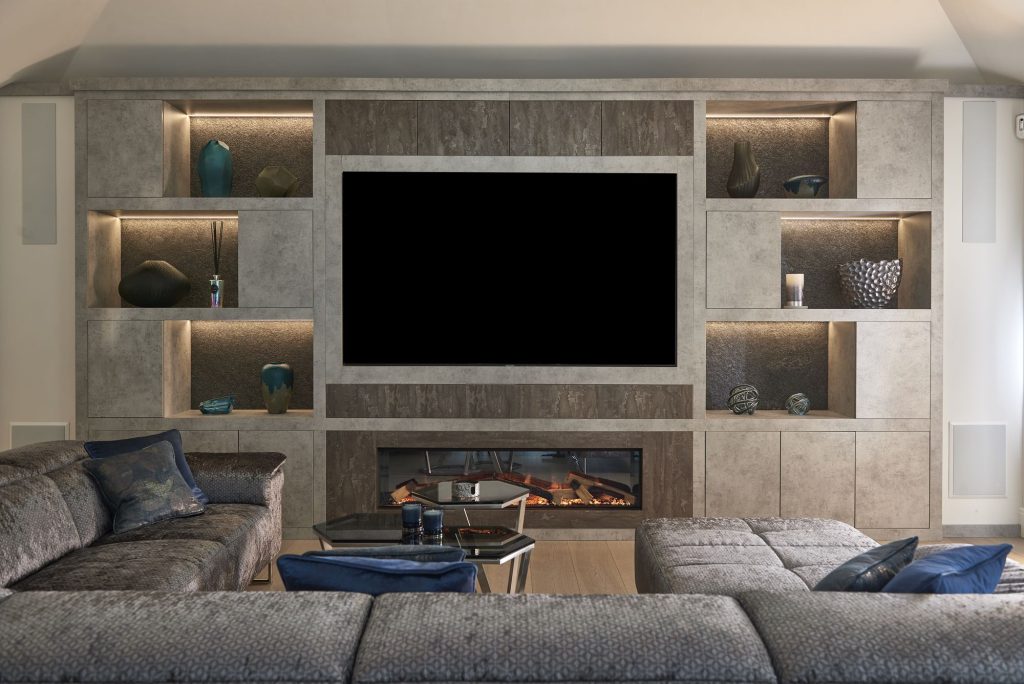
Downlights directly above the screen are the usual mistake: they wash down its face and show up as reflections. Put the lighting on separate circuits so it can be dimmed for watching, specify it with the electrician before first fix, and make every LED driver reachable without taking the wall apart. The flame effect of an electric fire is part of the evening light too, and is worth seeing in a darkened room before you choose one. For the fittings themselves, see our designer lighting.
Media wall ideas without a fire
The fire is the most common reason a screen ends up in the wrong place, so it is worth asking whether the room needs one. We would usually suggest leaving it out when:
- it would be on for the look and never for warmth;
- the room already has a fireplace on another wall, and two focal points would compete;
- the ceiling is not high enough for the fire, its clearance and a screen at a sensible height;
- the television is watched for hours at a stretch, for sport or gaming;
- the room is small, and the depth a fire needs would come out of the floor.
Without a fire the screen goes where it should, and the lower part of the wall becomes a long, low cabinet for the equipment, with niches, shelving or a decorative panel around the screen. That panel can be an artwork made for the wall: Lana works on canvas, glass, metal and slate panels, and a piece can be commissioned at the size and colour the wall needs.
If you are planning a wall around a fire, bring the fire’s model number and a photograph of the room to the showroom in Bowdon, open Monday to Saturday from 9am to 5pm, or send them through our contact page. We will start with the height of the screen.