
Dark Hallway Ideas: Lighting First, Colour Second
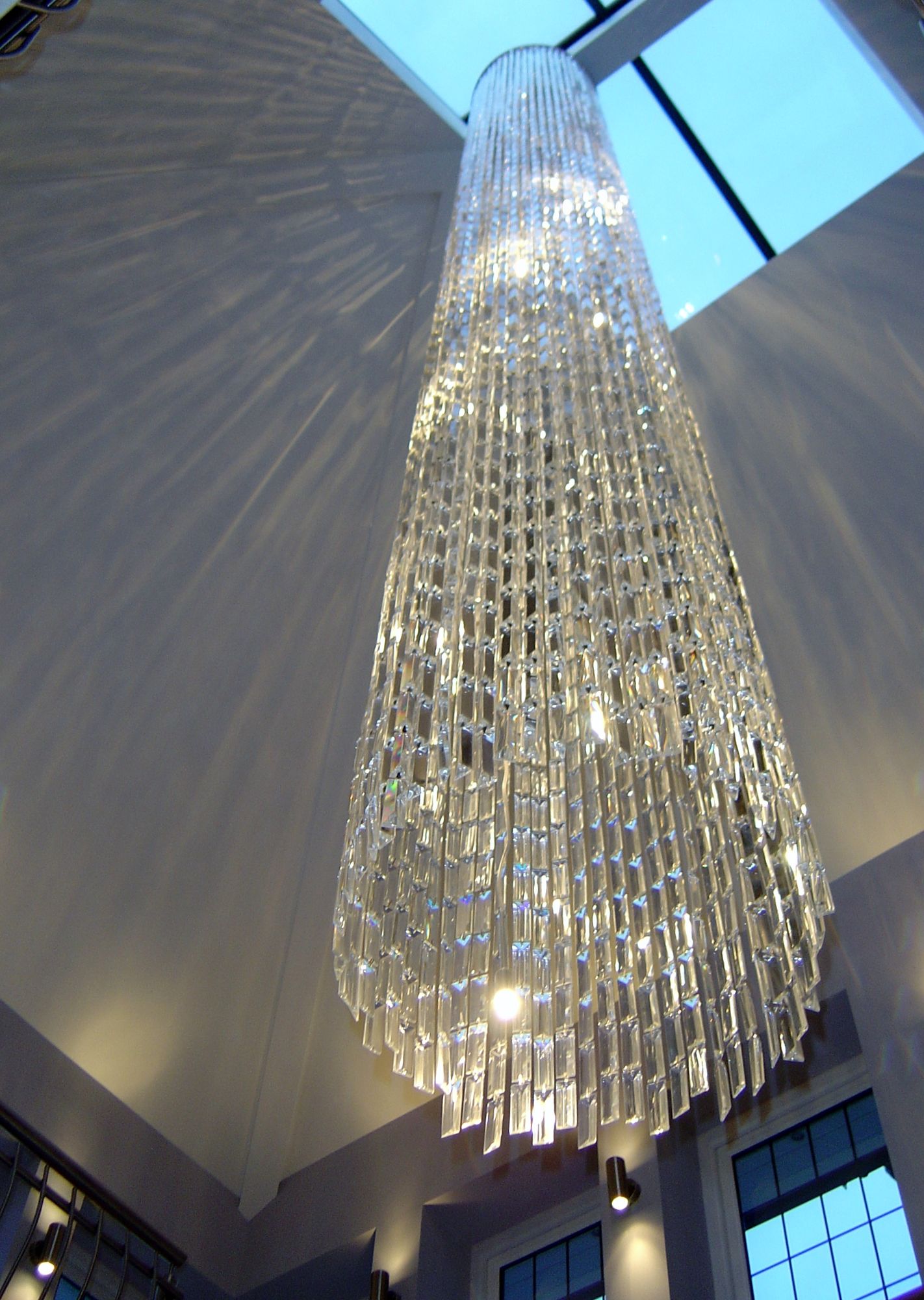
A hall with no window, or with nothing but the glass in the front door, is lit by its fittings for nearly every hour anyone spends in it. That is why so many dark halls get painted twice. The colour is picked from a card by a window, goes on the walls, and then looks grey and faintly dirty under the bulbs that actually light it.
So settle the lighting first, including the colour of the lamps, and choose the paint under that light. Done the other way round, the lighting spends its life correcting a colour that was never going to work.
Why the light decides the colour
In a room with a window, a colour has a daytime version and an evening version, and most people choose it by the daytime one. A dark hall only has the evening version, at nine in the morning as much as at nine at night. Whatever the lamps do to the paint is what the paint is.
Entrance hall lighting in three places
The door, the route and the stairs each need their own light, and a single central pendant serves none of them well.
At the door
This is the light you switch on with your coat still on, so the switch belongs right by the door and the fitting should light faces as well as the floor. If there is a mirror there, light it from the sides; a fitting directly overhead puts shadows under the eyes.
Along the route
Wall lights or picture lights at intervals, close enough that the pools of light meet. If the hall ends at a closed door, light the far end: a lit end wall gives a dark hall somewhere to lead to and stops it feeling like a tunnel.
At the stairs
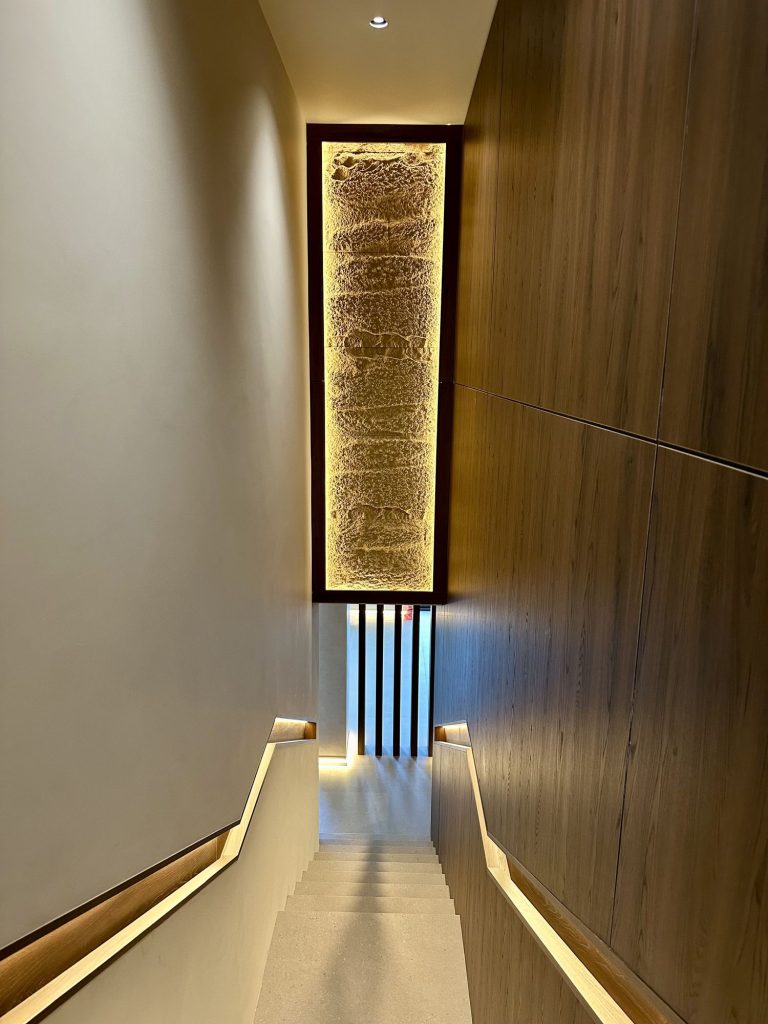
Light should fall on the treads from in front of you, so the edge of each step is clear; a fitting behind you throws your own shadow onto the next step. Low step lights in the wall beside the flight light the treads without glare, and a landing fitting switched from top and bottom lights the flight from above.
Separate circuits
Put the layers on separate circuits, with dimmers where they make sense, so the hall can be lit for what is happening in it:
- a full working circuit, for coming in with shopping or for cleaning;
- an evening circuit, usually the wall lights and the stairs;
- a low night circuit, the step lights or a lit panel, that can stay on until the last person goes to bed.
We specify this with the electrician before first fix wherever the building work allows. If dimmers and LED lamps are going together, have the electrician check they are compatible; a mismatched pair can flicker or hum.
Wall lights and lit panels
In a dark hall, wall lights do more for the colour than any other fitting, because a hall feels bright when its walls are lit, not its floor. A glass or fabric shade glows itself; an opaque one hides the lamp and lets the wall glow instead. That difference is hard to judge from a photograph, so see fittings in person: there is a range of designer lighting in the showroom.
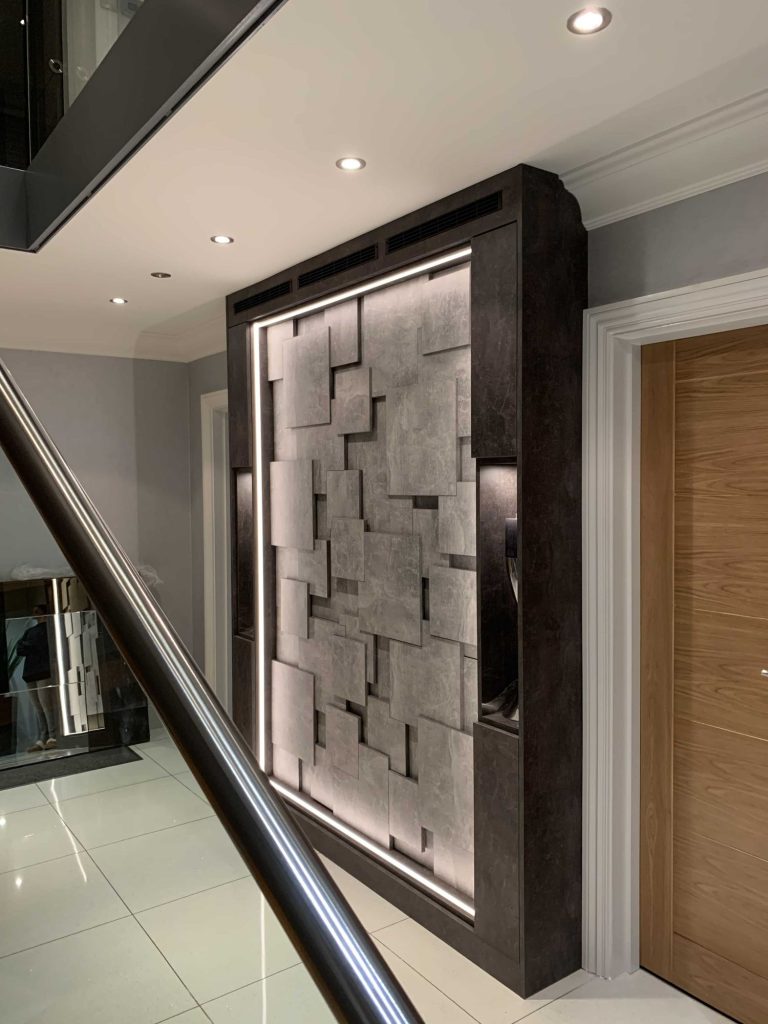
Lit panels go further. Set one at the turn of the stairs or the far end of the hall and it is the first thing the eye finds from the front door, as well as the light left on at night. Panels are planned before plastering, with the driver somewhere it can be reached. Lana works on glass, metal and slate panels as well as canvas, and a piece can be commissioned at the size the wall needs.
Hallway lighting for a low ceiling
A low ceiling rules out most pendants. Hung where they look right, they are at head height, and on the stairs your head rises with every step, so a pendant that clears the hall floor can be at face height three treads up. What suits a low hall instead:
- flush or semi-flush fittings that throw some light upward, so the ceiling reads as lit rather than as a dark lid;
- wall lights that wash upward, which lift a ceiling more than anything fixed to it;
- downlights, if used at all, set close to the walls and angled onto them rather than run down the middle.
The best colour for a dark hallway
Going darker on purpose
White in a hall with no daylight does not read as white. There is not enough light for it to reflect, so it settles into a flat grey and every scuff shows. A deep colour chosen deliberately (an inky blue, say, or a dark green) makes the same hall look intended rather than neglected, and the rooms off it look brighter by contrast as you step through.
Mid-tones are the risky ground: a mid grey or a muddy beige is neither fresh nor rich. If you would rather stay light, choose a white with some warmth in it, because a cool brilliant white under warm lamps looks grubby.
How a colour reads under warm light
Most homes are lit with warm white lamps, around 2700K, which pull every colour towards yellow. Cool greys go flat or slightly green, blues lose their brightness, and yellowish greens drift towards olive. Terracottas, ochres and browns tend to look richer on the wall than on the card.
So choose the lamps before the paint, and keep one colour temperature throughout the hall: a mix of warm and cool lamps makes one wall look like two colours. Lamps with a high colour rendering index (CRI 90 or above) show colours more faithfully.
Sheen
Matt hides imperfect plaster, but a deep matt colour marks where bags rub it, so use a scrubbable one on the lower wall. Eggshell or gloss in a dark colour reflects more of your light and reads almost like lacquer, but shows every bump in the plaster.
The ceiling and the woodwork
A brilliant white ceiling over dark walls draws a hard line round the top and makes a low ceiling look lower. Take the wall colour onto it, or a paler version, and the line disappears. So does the woodwork. A hall has more doors for its size than any other room, and white frames, skirtings and doors chop a dark wall into short pieces; painted in the wall colour, in a tougher finish, they let it run on unbroken.
What colour makes a hallway look wider
Colour alone rarely does it. Light on the side walls does more, because a lit wall reads as further away than a shadowed one. Keeping walls, woodwork and ceiling close in colour helps, since the eye has fewer edges to measure by, and in a long hall a deeper colour on the end wall draws it closer, so the hall reads shorter and wider.
As for which colours look good in a small hallway: the ones that look good under the lamps you have chosen. One colour carried through the hall, up the stairs and onto the landing usually beats several, because a small space divided into colours looks smaller still.
Test samples in the hall’s own light
Paint a large piece of card, leave a white border round it so the old wall colour does not skew your eye, and move it around: beside the front door, in the darkest corner, at the turn of the stairs. Look at it under the lamps you are keeping, at the hours the hall is used.
Shortlist in the showroom, with real samples side by side; decide in the hall. Lighting first, then colour chosen under those lamps: that is the order we work in for entrance hall design, and a dark hall on its own is a perfectly normal commission.
A design fee of £300 covers one room and includes every part of the design service. It is refunded as you order: 10% comes off any order until the whole £300 has come back, so a room you spend £3,000 on is designed free of charge.
Photographs of your hall taken at night, with the lights on, are the most useful thing to bring to the showroom on Vicarage Lane in Bowdon. It is open Monday to Saturday, 9am to 5pm, with no appointment needed. Or describe the hall to us through the contact form.